Conversation

cell classic
cell@shitposter.world
oh fug i just bought a QLC external SSD 
RE: https://mastodon.social/@nixCraft/115608241662744685
RE: https://mastodon.social/@nixCraft/115608241662744685
 2
2
 0
0
 0
0
cell classic
cell@shitposter.world
@prettygood i have a sd card from the 2000s that i forgot in a camera bag
booted it up and the contents were readable
booted it up and the contents were readable
2
0
4

snacks
snacks
@cell @prettygood larger gates in older flash hold more charge so should discharge slower and slc means it can be read with larger drift from initial state
1
0
3

mangeurdenuage 
 :gondola_head: 🌿


mangeurdenuage@shitposter.world
@cell
Already posted this several times but it's always a good reminder.
https://www.youtube.com/watch?v=VajB8vCsZ3s
That's the issue with all nand storage.
It's well documented, conservation of energy will always be a thing, plus all the quantum probabilities issues they have to go around to make it viable makes it a hard risk.
Again, just go for hdds/optical medium for medium to long term storage.
Already posted this several times but it's always a good reminder.
https://www.youtube.com/watch?v=VajB8vCsZ3s
That's the issue with all nand storage.
It's well documented, conservation of energy will always be a thing, plus all the quantum probabilities issues they have to go around to make it viable makes it a hard risk.
Again, just go for hdds/optical medium for medium to long term storage.
0
0
1
mangeurdenuage :gondola_head: 🌿
mangeurdenuage@shitposter.world
@cell @prettygood Different type of technology. Nor SLC of the time is much less miniaturized. Same is correct for even cartridges of lets say nes or snes etc... The thing is that the technology was different and quality control of the time was better. And the economical model was also different.
But they do suffer from the same issue of conservation of energy it's just much much more durable.
But they do suffer from the same issue of conservation of energy it's just much much more durable.
1
0
1
mangeurdenuage :gondola_head: 🌿
mangeurdenuage@shitposter.world
@snacks @cell @prettygood
Conservation of energy. It just takes a much longer time with older hardware.

Conservation of energy. It just takes a much longer time with older hardware.
1
0
3


@snacks @cell @prettygood Magnetic charge tends to last longer than electrical charge - although you can get EEPROM with 100 year retention.
I'm sure the HDD could potentially retain the data for longer, but you wouldn't be able to read it, as well the controlling proprietary software for the drive is designed to fail long before that.
I'm sure the HDD could potentially retain the data for longer, but you wouldn't be able to read it, as well the controlling proprietary software for the drive is designed to fail long before that.
2
0
3
@mangeurdenuage @cell @prettygood The NES and SNES used ROM, which isn't subject to voltage decay.
Although such cartridges stored game save data on SRAM, maintained by a battery, which eventually runs out of charge.
Although such cartridges stored game save data on SRAM, maintained by a battery, which eventually runs out of charge.
0
0
1
snacks
snacks
@Suiseiseki @cell @prettygood best result i found was from superuser and didn't cite a source but:
> Most sources state that permanent magnets lose their magnetic field strength at a rate of 1% per year. Assuming this is valid, after ~69 years, we can assume that half of the sectors in a hard drive would be corrupted
https://superuser.com/questions/284427/how-much-time-until-an-unused-hard-drive-loses-its-data#312764
> Most sources state that permanent magnets lose their magnetic field strength at a rate of 1% per year. Assuming this is valid, after ~69 years, we can assume that half of the sectors in a hard drive would be corrupted
https://superuser.com/questions/284427/how-much-time-until-an-unused-hard-drive-loses-its-data#312764
1
0
3
@snacks @cell @prettygood Looking at the post, there is a claim that; "HDD data rentention is about ~70 years if it kept under 75 °C. If it kept under room temp 25 °C, probably can last more than 100 years!"
Such loss of magnetic field strength doesn't seem relevant, as a permanent magnet is not how data is stored on a HDD - although I guess the permanent magnets used by the drive head will get weaker over time.
You would need to check the rates of decay of Giant Magnetoresistance.
Such loss of magnetic field strength doesn't seem relevant, as a permanent magnet is not how data is stored on a HDD - although I guess the permanent magnets used by the drive head will get weaker over time.
You would need to check the rates of decay of Giant Magnetoresistance.
2
0
1
@snacks @cell @prettygood https://post.bytes.com/forum/topic/software-development/757826-magnetic-decay-in-modern-hard-drives
>Acceptable levels of signal decay vary depending on system design but typically range between 10-20% [ref4], so it would take (-1/326000)*ln(0.8) = about 22 years for an entire bit domain to get 20% weaker causing possible loss of data due solely to thermal demagnetization effects.
But really a good HDD should be able to recover from decay worse than that.
>Acceptable levels of signal decay vary depending on system design but typically range between 10-20% [ref4], so it would take (-1/326000)*ln(0.8) = about 22 years for an entire bit domain to get 20% weaker causing possible loss of data due solely to thermal demagnetization effects.
But really a good HDD should be able to recover from decay worse than that.
0
0
1

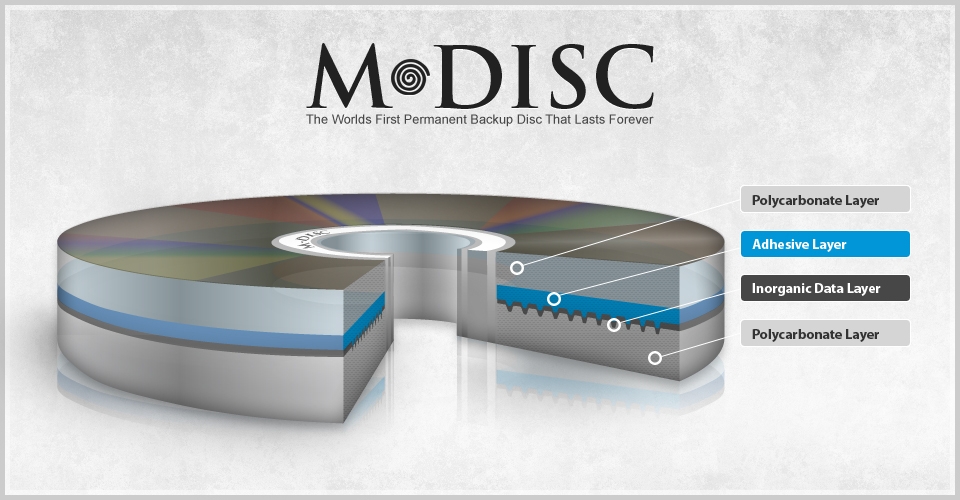
@RedTechEngineer @snacks @cell @prettygood Just attach a huge amount of ECC-SRAM to a solid state radioisotope thermoelectric generator with enough plutonium to get storage retention for an acceptable time.
If SRAM is too expensive, go with ECC-DDR3, but the extra processor complexity and higher risk of corruption could limit retention time.
For personal experience, magnetic retention is a lot longer than 22 years - a 26+ year old HDD that hadn't been plugged in for at least 6 years read fine for me.
If SRAM is too expensive, go with ECC-DDR3, but the extra processor complexity and higher risk of corruption could limit retention time.
For personal experience, magnetic retention is a lot longer than 22 years - a 26+ year old HDD that hadn't been plugged in for at least 6 years read fine for me.
1
0
1
snacks
snacks
@Suiseiseki @RedTechEngineer @cell @prettygood rom is probably the longest lasting storage that can easly ibe accessed by computers
1
0
2
snacks
snacks
@RedTechEngineer @Suiseiseki @cell @prettygood i mean something like mask rom or the typical make of prom with blowabke fuses. Basically just wires representing your data
0
0
2
1
0
0
snacks
snacks
Edited 5 days ago
@Suiseiseki @cell @prettygood that's a way to sense magnetic fields. All i can find on the topic is that it's a new read head design that allows for denser data on the platter as it senses field orientation instead of just a change in the field
1
0
1
@snacks @cell @prettygood You need to be able to sense the thin-film inductive written data to be able to read the data off; https://web.archive.org/web/20150105035135/https://www1.hitachigst.com/hdd/technolo/gmr/gmr.htm
1
0
0
snacks
snacks
@Suiseiseki @cell @prettygood i just wasted 20 minutes learning nothing new except that hdd heads are made with photolithography now
1
0
1