
Lucy [hiatus era] 𒌋𒁯
lucy
 5
5
 0
0
 2
2


Lucy [hiatus era] 𒌋𒁯
lucy
1
0
2
chjara@akko.wtf
chjara@akko.wtf
the only issue is that you can't use standard library functions even in metaprogramming/constexpr contexts because @nogc and so on still applies and the stdlib is not @nogc
1
0
1
Lucy [hiatus era] 𒌋𒁯
lucyi wouldn't really have a libc either obviously unless i fork or port or write it myself.
1
0
0

pistolero
p@fsebugoutzone.org> typesafe
Types aren't a safety mechanism in C, they're an annotation for other programmers. There are no safety mechanisms in C, because there is no reason to have such a thing. C is the machine, and the machine's job is to do what you've written, even if you've written something stupid.
Even gcc's output is legible if you use -Os. So you look at the compiler's output, you look at C, one of C's really nice parts is that you can tell what the compiler's going to do while you're writing.
2
0
7
chjara@akko.wtf
chjara@akko.wtf
2
0
1
chjara@akko.wtf
chjara@akko.wtf
1
0
1
 why can't we have something like C but typesafe? D seems quite close

chjara@akko.wtf
chjara@akko.wtfD lets you programatically make strings and give them to the compiler as more source code
it's compile-time only, it's the way it does metaprogrammings and macros
0
0
2
chjara@akko.wtf
chjara@akko.wtf
0
0
0
pistolero
p@fsebugoutzone.org> why can't we have something like C but typesafe?
Okay, this is going to sound like sarcasm, but I am really asking a real question because I don't understand why you'd want that from C. What do you want a safety mechanism for? What does "safe" even mean? Safe from what? Again, real questions. In general, what would safety mean?
> D seems quite close
Fun language, I think I never picked it up because of some weird licensing thing they were doing with the compiler back in the day; I don't remember, though.
2
0
2

amenome
anemone@ebiverse.social@lucy@netzsphaere.xyz @arcana@fedi.layer02.net give in and embrace rust
3
0
4

Blurry Moon
sun@shitposter.world
2
3
9
amenome
anemone@ebiverse.social@lucy@netzsphaere.xyz @arcana@fedi.layer02.net technically it’s separate you can just use rustc without cargo if you hate yourself that much
1
0
2

pistolero
p@fsebugoutzone.orgrust_bot_astroturfing.png
 0
0
3
0
0
3

Caek Islove 🍰 💖
caekislove@caekis.love
0
0
3
arcana@layer02.net
arcana@layer02.net
1
0
1
arcana@layer02.net
arcana@layer02.net
0
0
1
amenome
anemone@ebiverse.social@lucy@netzsphaere.xyz @mia@shrimptest.0x0.st @arcana@fedi.layer02.net python is worse since it will silently fail or install different versions of libraries than the ones you initially picked
1
0
2
Lucy [hiatus era] 𒌋𒁯
lucyOr, (de)referencing should be implicit in most cases. i should never have to write mystruct->deadcopsinmybasedment to access members of a struct. mystruct.deadcopsinmybasedment doesn't mean anything. or when passing something that's supposed to be a pointer then just pass it as a pointer.
2
0
3



バツ子(犬育てマニア
ageha@tomo.airen-no-jikken.icuhere's c treating the type system as a safety mechanism https://open-std.org/JTC1/SC22/WG14/www/docs/n3042.htm
i love c, and c11 and c23 have been for the most part helpful little pushes towards cleaning things up, but a complete reboot would be so much better. make a new lang that can even keep the same machine-level representation, and just clean up syntax, so you don't have "const" scattered around meaning multiple things and type signatures are rearranged to not make funpointers suck etc; add basic type inference system, with an off switch for when you want to do bit padding kinda stuff; and clean up stdlib to be like other modern langs, with naming conventions and modularisation consistent and predictable and no more "gets DEPRECATED DO NOT USE" kinda stuff floating around
2
0
2
pistolero
p@fsebugoutzone.org Dennis Ritchie had a proposal for variable-length arrays, but by the time he had the idea, it was already out of his hands and in the hands of the standards committee, and they hated everything he ever suggested.
> slices and bounds checking would be nice.
C doesn't have arrays; it has some syntax around pointers. If you try to give it "real" arrays, then the runtimes for all of these other dingus languages stop working, because sometimes what you want is a contiguous region of memory.
Maybe you have a contiguous region of memory (framebuffer) and you don't know how big it is at compile-time: now there's a runtime library the compiler has to hook into. The way this problem is solved in C is that you get a segfault: the OS has built-in memory safety. Or say you've got to call a special instruction to get the dimensions of the framebuffer stored in a register: if you couldn't fudge types in C, you'd have to implement most of that in assembly instead of just one or two instructions.
C is the machine, though, and the machine doesn't have bounds-checking because it doesn't have bounds. Sometimes it has an MMU, sometimes it has ridiculous segment registers and an A20 line and stuff like that, sometimes it has memory-mapped I/O registers. If what you want is a "real" array, you probably don't want C for this task.
> Or, (de)referencing should be implicit in most cases.
This would be a disaster for cases where you care about that kind of thing; for cases where you don't care and are fine with it being implicit, you should probably not use C.
A nice thing about C is that you can translate what you've written into what it's doing: you see an `->` and you know that there's a read. This matters when it's timing-sensitive (say, an
 interrupt handler
  ) or time-sensitive (factoring prime numbers). Importantly, it also matters when you are debugging, because you can see a pointer is being read through. A memory-safe language, you don't have that concern.
I had a bug a long time back: it was segfaulting...nowhere. Just initializing a variable that wasn't even a pointer. Pretty reliably, too: same function, same variable, every time. I blamed the compiler (gcc treats ARM like a second-class citizen still) and looked at the exact address. No arbitrary pointers being dereferenced, it was just pushing to the stack...just pushing to the stack. I followed the stack pointer around, expecting that it had been corrupted...somehow. Nope. I had linked against libSDL, this build of SDL linked against libpulse, the kernel defaulted to 16kB of stack per thread, libpulse was eating more than 16kB of stack just for having been initialized. (Giving it more stack via sysctl fixed it, telling SDL to use ALSA instead of Pulse fixed it, turning off sound fixed it, and that's what I eventually went with, because I didn't need sound.) This was a pain in the ass, cost me half a day, and it was one of the very few implicit mechanic. And, you know, you add n implicit mechanics, you get n! complexity. Bounds-checking doesn't save you from this kind of thing, and worse, this is stuff that you've got to worry about *somewhere*: high-level languages are going to have problems like this, and there has to be a region where you can debug it, there has to be something between the bytecode VM's runtime and the machine. If it's not C, then it's just machine code. There has to be a language that is just the machine: no more, no less. If this stuff worms its way into C, then there has to be something under C.
> or when passing something that's supposed to be a pointer then just pass it as a pointer.
C++ has references in declarations and they are a nightmare; you see codebases where the style guide forbids their use. It makes debugging a nightmare. `f(&x)` means you get to see right there that you're passing an address.
But this is a feature list. What is "safety"? Page faults don't happen? That's what I'm trying to get at; I think the machine is safe already as long as you don't try to eat any of its components and it doesn't catch fire. Like, it has to mean something; if it means bounds-checking, that's a feature: you must mean that you are safe from running off the end of the array or safe from page-faults, something.
1
0
3

💛 #1 Honey Bee Lovely simp 🐝
lunarised@whinge.townNever really got into D personally
1
0
1
Lucy [hiatus era] 𒌋𒁯
lucyyou can have both pointers and arrays in a language.
> What is "safety"
bad code either not compiling successfully, or predictably failing at runtime. and not when you try to do something illegal on the machine, i mean if you try to do something your code isn't supposed to do. decades of "just don't write bad code" didn't prevent people from writing bad code. ada's contracts would be so nice to have in C.
1
0
3
Lucy [hiatus era] 𒌋𒁯
lucy
1
0
0
pistolero
p@fsebugoutzone.org> here's c treating the type system as a safety mechanism https://open-std.org/JTC1/SC22/WG14/www/docs/n3042.htm
You are showing me the standards committee doing something stupid. My reference for this is the reason the creators of the language said they added types, not the standards committee, who are a bunch of anal-retentive language Nazis that have completely ignored Ken and Dennis every chance they got.
I'm with the hackers on this one and the administrative Karens can go fuck themselves.
> c11 and c23 have been for the most part helpful little pushes towards cleaning things up,
I wish they'd go bother some other language. They're not "cleaning things up", they hate C and want it to be something else.
> so you don't have "const" scattered around meaning multiple things
I don't know what they've done, but I imagine they've "fixed" it by duct-taping bullshit to horseshit. It's funny you'd bring up const:
"The fundamental problem is that it is not possible to write real programs using the X3J11 definition of C. The committee has created an unreal language that no one can or will actually use."If you are going to appeal to an authority, pick a better one. The committee can fuck all the way off.
0
0
0
💛 #1 Honey Bee Lovely simp 🐝
lunarised@whinge.town
0
0
1
pistolero
p@fsebugoutzone.org> you can have both pointers and arrays in a language.
Sure. I mean, you can do memory-safe pointers. That's not quite what C has, though. If C were to start doing this, then low-level non-assembly would need a new language.
> bad code either not compiling successfully, or predictably failing at runtime.
I think it's still poorly defined.
> i mean if you try to do something your code isn't supposed to do.
This is an unsolved problem in computer science; it's just a matter of degree.
> decades of "just don't write bad code" didn't prevent people from writing bad code.
It wasn't supposed to. You can write bad code in *any* language: if you want your program to work, don't do that. There is no way to enforce this for other people's code. People will fuck it up. The only thing you have control over is what *you* write: don't fuck it up and you're fine.
> ada's contracts would be so nice to have in C.
I think if you want codified invariants in C, you use an assert() macro: that makes it fail predictably at runtime. People don't like assertions because they get abused for error-handling or people write assertions that have side-effects, and it's understandable, but the fact that someone else might fuck it up doesn't make a tool any less useful. assert() (or rolling your own version) gets you 90% of the way there, guard clauses cover the rest.
1
0
2
pistolero
p@fsebugoutzone.orgI think probably not D, but depending on what you actually want, there are a few languages that come to mind.
1
0
1
pistolero
p@fsebugoutzone.org
2
0
3
pistolero
p@fsebugoutzone.org
1
0
1
pistolero
p@fsebugoutzone.org> snacks keeps talking about forth..
It's kind of an astonishing language once you really *get* it. It's like, as expressive as Lisp, but it also is usable without an OS.
> what dialect would you recommend for that specifically?
I used gForth a while but I don't think I really understood Forth until I spent a day working through Jonesforth.
The thing about Forth is that it barely even exists and is kind of just a style of programming. (Chuck Moore didn't like the standardization very much, he felt like it missed the point.) That having been said, it's hard to grasp until you use it some, and an ANS Forth is probably your best bet at being able to understand and be understood or find documentation, so gForth is probably a good place to start. (Or just get to hacking on DuskOS. YMMV.)
1
0
5

pistolero
p@fsebugoutzone.org> Is that still even used?
That's Apple; the language exists independently of Apple, Apple just adopted it. (Strictly speaking,
 adopted it and Apple acquired NeXT.) If it was just Apple, I wouldn't have suggested it.
> Didn't swift take over fully?
I think, even within Apple, Swift:ObjC::VB.NET:C++, but I don't follow what they're doing so closely.
1
0
3
2
0
0
pistolero
p@fsebugoutzone.orghttps://en.wikipedia.org/wiki/Objective-C :
> Originally developed by Brad Cox and Tom Love in the early 1980s, it was selected by NeXT for its NeXTSTEP operating system. Due to Apple macOS’s direct lineage from NeXTSTEP,[4] Objective-C was the standard language used, supported, and promoted by Apple for developing macOS and iOS applications (via their respective application programming interfaces (APIs), Cocoa and Cocoa Touch) from 1997, when Apple purchased NeXT until the introduction of the Swift language in 2014.
> Objective-C programs developed for non-Apple operating systems or that are not dependent on Apple's APIs may also be compiled for any platform supported by GNU GNU Compiler Collection (GCC) or LLVM/Clang.
1
0
2

RedTechEngineer
RedTechEngineer@fedi.lowpassfilter.link
0
0
2

Red Rozenglass
rozenglass@fedi.dreamscape.linkI still prefer C personally; I don't enjoy rust's syntax, its politics, authoritarian spirit, or its turbulent and web-madness-infected ecosystem. But it's not too bad if you freely permit yourself to hold it "wrong".
0
0
1

pistolero
p@fsebugoutzone.org
2
0
3
pistolero
p@fsebugoutzone.org
1
0
1
pistolero
p@fsebugoutzone.org
1
0
2

shibaozi
shibao@misskey.bubbletea.dev@lucy@netzsphaere.xyz @p@fsebugoutzone.org the answer that you'll be unhappy with is that all of that exists in C, it's called cpp and the cppstdlib. more seriously though, you should try writing 2024 standard cpp, it really is like a different language almost
3
0
3
shibaozi
shibao@misskey.bubbletea.dev@lucy@netzsphaere.xyz @p@fsebugoutzone.org i don't know what you mean
2
0
1
Lucy [hiatus era] 𒌋𒁯
lucycertain features of C++ require a runtime, you'd have to disable them (or ship a freestanding runtime) for freestanding code. that is, code that runs on hardware (like a kernel) without an underlying OS.
1
0
2



GNUkko Sauvage (eris-ng) 
eris@p.enes.lv
#includeing the specific headers, you don't need to support that shit ¯\_(ツ)_/¯CC: @p@fsebugoutzone.org @shibao@misskey.bubbletea.dev
2
0
2
shibaozi
shibao@misskey.bubbletea.dev@eris@p.enes.lv @p@fsebugoutzone.org yeah and my perception is that it's baked into the executable so it's fair to just consider that as part of your program, unless you're talking about dlls that you might need to execute the program.
i didn't understand what you meant by "it still is" but i get it now, you should read into the new module imports and all the other changes with the latest cpp definitions, they've been hard at work basically defining an entirely new standard library and conventions that give you the safety that you're looking for. even if you can still technically use a random naked pointer or other c stuff, i would argue that modern cpp gives you that security if you don't use the old c-style of doing stuff
2
0
1
shibaozi
shibao@misskey.bubbletea.dev@eris@p.enes.lv @p@fsebugoutzone.org or like have you ever worked with a codebase that's used RAII instead of plain c stuff? if not then i can understand how it would feel that way
0
0
1
GNUkko Sauvage (eris-ng)
eris@p.enes.lv
CC: @p@fsebugoutzone.org @shibao@misskey.bubbletea.dev
0
0
1
pistolero
p@fsebugoutzone.org
0
0
1
pistolero
p@fsebugoutzone.org
1
0
0
shibaozi
shibao@misskey.bubbletea.dev@p@fsebugoutzone.org @lucy@netzsphaere.xyz with enough ifndefs and defines, anything is possible
0
0
1
shibaozi
shibao@misskey.bubbletea.dev@p@fsebugoutzone.org @eris@p.enes.lv is that not always an option? i guess i didnt go as deep into c++
1
0
1
pistolero
p@fsebugoutzone.orgAlso somehow the person asking the questions got untagged:
@lucy
1
0
2
shibaozi
shibao@misskey.bubbletea.dev@p@fsebugoutzone.org @eris@p.enes.lv @lucy@netzsphaere.xyz o yeah that is true i sort of use them interchangeably
1
0
1

pistolero
p@fsebugoutzone.org
0
0
0
pistolero
p@fsebugoutzone.org
2
0
1

 0
0
3
0
0
3
pistolero
p@fsebugoutzone.orgbjarne--face_of_disgust.png
 0
0
1
0
0
1



 2
0
2
2
0
2
pistolero
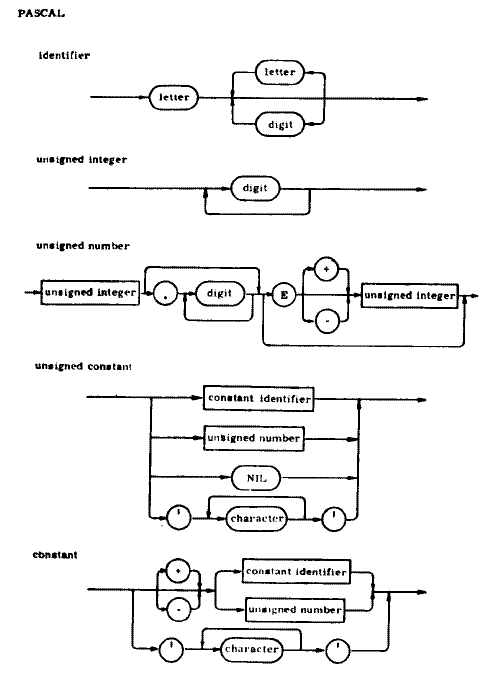
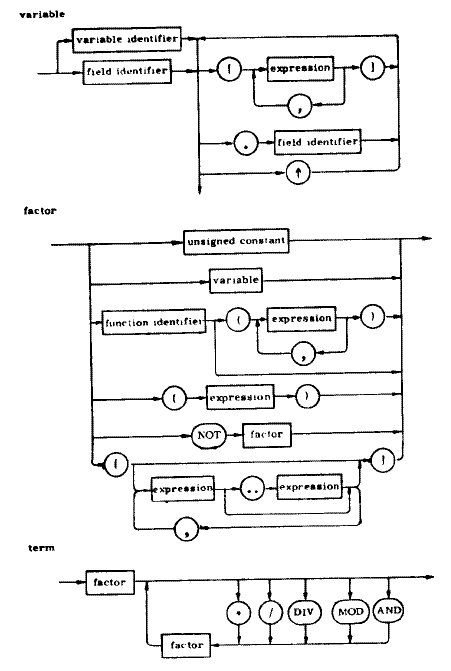
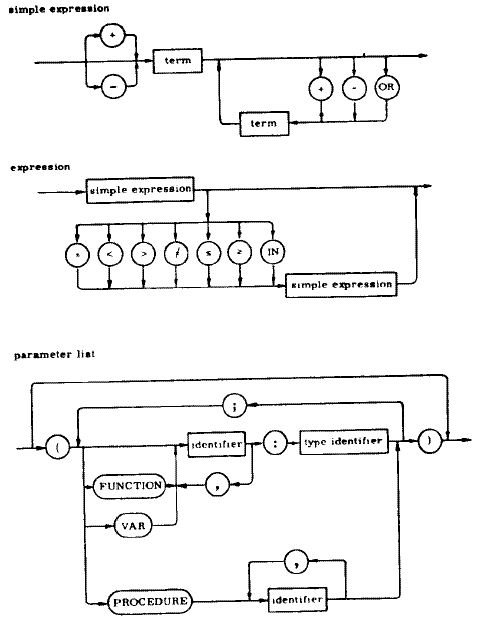
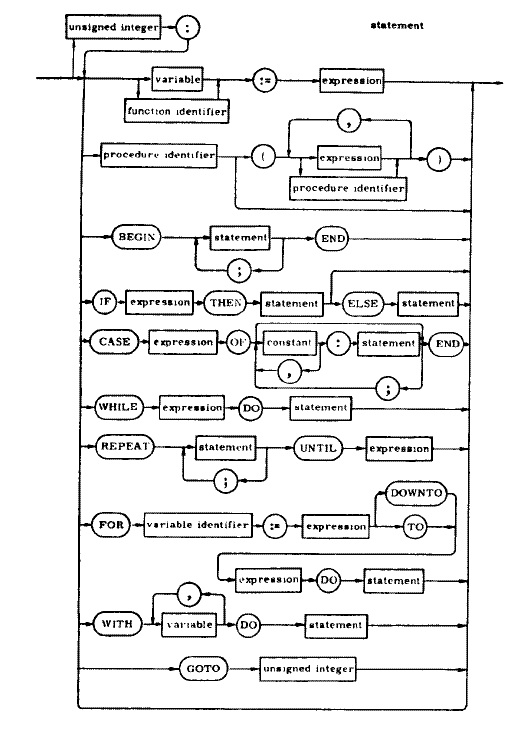
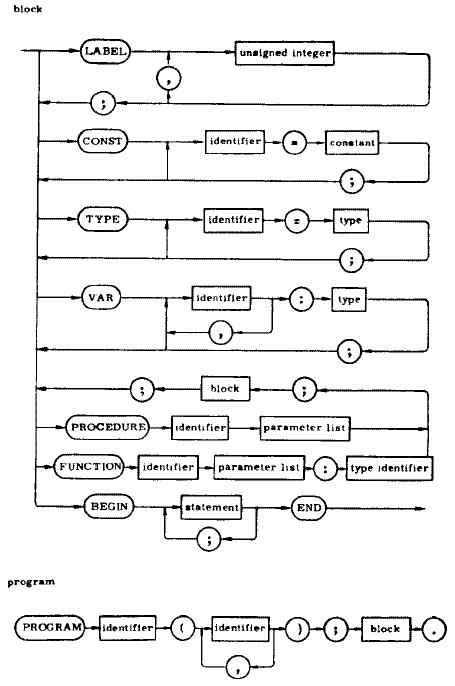
p@fsebugoutzone.org> wonder why no one ever brings up Pascal in these conversations
Because Pascal was fixed eventually; Modula, Oberon, Limbo, Go.
Pascal itself has problems that you can't fix without removing some of the Pascal from it.
> (other than the obvious disgust of it looking a bit BASIC to some)
I think "Why Pascal is Not My Favorite Programming Language" was a much more reasonable version. I've gotten past the ":=" by now.
0
0
1


Another Linux Walt Alt (lnxw37b2) {3EB165E0-5BB1-45D2-9E7D-93B31821F864}
lnxw37b2@shitposter.world
0
0
2