
georgia

Posts
74721Following
404Followers
2066$PAGE_VIEWS



georiga on telegram
georgia@trashserver.net on xmpp
(response times may vary)








अहं ब्रह्मास्मि त्वं ब्रह्म असि अयम् आत्मा ब्रह्म सर्वं खल्विदं ब्रह्म
georgia
georgia
@genmaicha different hindus have different answers to this. in many schools of hinduism, the individual soul while being a part of God and (like God) being characterized by purity, bliss and consciousness is still an individual soul unique to that person (memory or no memory). for these hindus even after complete liberation a person remains an individual, not losing their unique perspective/personality (even while their personality becomes very holy). these hindus do believe God exists in a form within the soul (a form which doesnt "mix" with the rest of the soul and can't be experienced in yoga like the soul is), called the Antaryami, the inner controller. this form of God is how God dwells within and controls the being and experiences everything they do. it overlaps with the universal hindu belief in the Supersoul, the Paramatman. the Paramatman is God as the Supreme Self/Soul. while the individual self of the living being is called the jivatman, and experiences the fruits of his actions (karma phala) which leads to pleasure and pain, the supersoul is a silent witness who doesnt partake in good deeds or bad deeds. of course while the soul is in bondage, he must partake in the fruits of his actions, but once he knows God, he is free from this fetter, knowing himself to be a non-doer, only the material nature is a doer.
heck, in some (cringey and wrong) streams of hinduism there are even different "types" of souls with different natures and eternal fates. some souls reincarnate forever, while higher souls find liberation in the kingdom of heaven, and the lowest souls are perpetually evil and dwell in hell eternally. the question here is why God would create souls with an evil nature only to damn them perpetually, but as I said, madhva is cringe and wrong.
in monist-lite hinduism the jivatman is at very least somewhat different (a part/emanation) from the supersoul which is God and totally self-less (although God has a Personality). this is like a different way of looking at the form of God which dwells as the inner controller within all beings. in my understanding the Paramatman is more transcendent and is emphasized to be a non-agent/witness while the Antaryami dwells within each soul as its controller. but in monist hinduism, the jivatman realizes he is literally the Paramatman in full, and his suffering thus ends. now I'll address some theory.
basic hindu theory states that we arent just an individual soul (regardless of ones conception of the soul as God or not), we have three bodies (and five "sheaths" but im not addressing that here, I dont understand it well) that bind us to samsara and make us unique beings from one another (if one is a monist who believes the soul is not unique). the description of the three bodies is not universal across hinduism, so ill mostly say what my understanding is. each body I'll address is more subtle and inherent than the next, and each body relies on the succeeding ones.
the gross physical body is determined by ones karma (there are other things that determine it obviously, like classically its believed ones resolve/mental state at the time of death determines ones future body, and obviously divine grace is a factor imo) and changes completely with each life and includes the physical sense organs and physical organs of action. the physical body is the physical instrument of the soul. it is engaged in the state of waking. it ages and perishes upon death.
the subtle body contains the subtle powers of the sense organs and organs of action, the life force (five pranas that facilitate bodily functions), the mind (which parses sense information and performs quick mental tasks, like wondering and feeling), the intellect (which performs long mental tasks, it deliberates and discriminates), the (mental) memory (mentally storing sense and mind impressions), and the ego (which creates the sense of i-ness and my-ness). the subtle body is the mental and energetic instrument of the soul. it changes from life to life for similar reasons, but its essential characteristics are carried from one body to the next. the subtle body is only experienced within the state of dreaming for most people, but yogis can experience their subtle body in meditation ("astral projection") and in the waking state they can use its qualities to achieve powers like levitation.
finally, the casual body. the casual body is the innermost housing of the soul, and the most subtle of bodies. it is the longest-lived body, existing even after the universe is dissolved (in this state a being experiences something like deep dreamless sleep, which is the state of consciousness the causal body reigns in). it is the source of the other two bodies and it binds us to samsara. here is where karma theory comes in. the casual body is the storehouse of the samskaras, which are impressions from past experiences (including thoughts and actions), including deep impressions from past lives that the memory has forgotten. even if you dont remember doing something, your casual body remembers. the samskaras become vasanas (subconscious mental inclinations) which can be non-binding or binding, producing urges to act. this is part of how karma is cyclical and positively reinforcing. ones past thoughts, actions and experiences becomes ones personality (again, in my belief grace/providence also plays a role) as well as their future body. so even though a person has different mental memories in their subtle body, they are still overwhelmingly influenced by samskaras ("soul memories") in the causal. and as long as there are dormant samskaras/karma waiting to fructify (if you want I can tell you why yogis dont immediately die upon being liberated, its because not all forms of karma cease, like a potters wheel that keeps spinning even when you turn it off), a new subtle and often a new physical body will be obtained. the greatest way to fight the karmic cycle is yoga, of course!
to digress a bit, according to vedanta, the body is the chariot, the soul is the rider, the intellect the charioteer, the mind the reins, the senses the horses, and perceivable things the various paths.
anyway, I believe karma and transmigration is so beautiful for many reasons, but mostly because it is an instrument of Gods perfect justice while also disguising this justice (at least in more ignorant abodes). it facilitates lila (divine play/pasttime).
heck, in some (cringey and wrong) streams of hinduism there are even different "types" of souls with different natures and eternal fates. some souls reincarnate forever, while higher souls find liberation in the kingdom of heaven, and the lowest souls are perpetually evil and dwell in hell eternally. the question here is why God would create souls with an evil nature only to damn them perpetually, but as I said, madhva is cringe and wrong.
in monist-lite hinduism the jivatman is at very least somewhat different (a part/emanation) from the supersoul which is God and totally self-less (although God has a Personality). this is like a different way of looking at the form of God which dwells as the inner controller within all beings. in my understanding the Paramatman is more transcendent and is emphasized to be a non-agent/witness while the Antaryami dwells within each soul as its controller. but in monist hinduism, the jivatman realizes he is literally the Paramatman in full, and his suffering thus ends. now I'll address some theory.
basic hindu theory states that we arent just an individual soul (regardless of ones conception of the soul as God or not), we have three bodies (and five "sheaths" but im not addressing that here, I dont understand it well) that bind us to samsara and make us unique beings from one another (if one is a monist who believes the soul is not unique). the description of the three bodies is not universal across hinduism, so ill mostly say what my understanding is. each body I'll address is more subtle and inherent than the next, and each body relies on the succeeding ones.
the gross physical body is determined by ones karma (there are other things that determine it obviously, like classically its believed ones resolve/mental state at the time of death determines ones future body, and obviously divine grace is a factor imo) and changes completely with each life and includes the physical sense organs and physical organs of action. the physical body is the physical instrument of the soul. it is engaged in the state of waking. it ages and perishes upon death.
the subtle body contains the subtle powers of the sense organs and organs of action, the life force (five pranas that facilitate bodily functions), the mind (which parses sense information and performs quick mental tasks, like wondering and feeling), the intellect (which performs long mental tasks, it deliberates and discriminates), the (mental) memory (mentally storing sense and mind impressions), and the ego (which creates the sense of i-ness and my-ness). the subtle body is the mental and energetic instrument of the soul. it changes from life to life for similar reasons, but its essential characteristics are carried from one body to the next. the subtle body is only experienced within the state of dreaming for most people, but yogis can experience their subtle body in meditation ("astral projection") and in the waking state they can use its qualities to achieve powers like levitation.
finally, the casual body. the casual body is the innermost housing of the soul, and the most subtle of bodies. it is the longest-lived body, existing even after the universe is dissolved (in this state a being experiences something like deep dreamless sleep, which is the state of consciousness the causal body reigns in). it is the source of the other two bodies and it binds us to samsara. here is where karma theory comes in. the casual body is the storehouse of the samskaras, which are impressions from past experiences (including thoughts and actions), including deep impressions from past lives that the memory has forgotten. even if you dont remember doing something, your casual body remembers. the samskaras become vasanas (subconscious mental inclinations) which can be non-binding or binding, producing urges to act. this is part of how karma is cyclical and positively reinforcing. ones past thoughts, actions and experiences becomes ones personality (again, in my belief grace/providence also plays a role) as well as their future body. so even though a person has different mental memories in their subtle body, they are still overwhelmingly influenced by samskaras ("soul memories") in the causal. and as long as there are dormant samskaras/karma waiting to fructify (if you want I can tell you why yogis dont immediately die upon being liberated, its because not all forms of karma cease, like a potters wheel that keeps spinning even when you turn it off), a new subtle and often a new physical body will be obtained. the greatest way to fight the karmic cycle is yoga, of course!
to digress a bit, according to vedanta, the body is the chariot, the soul is the rider, the intellect the charioteer, the mind the reins, the senses the horses, and perceivable things the various paths.
anyway, I believe karma and transmigration is so beautiful for many reasons, but mostly because it is an instrument of Gods perfect justice while also disguising this justice (at least in more ignorant abodes). it facilitates lila (divine play/pasttime).
 2
2
 0
0
 2
2

georgia
georgia
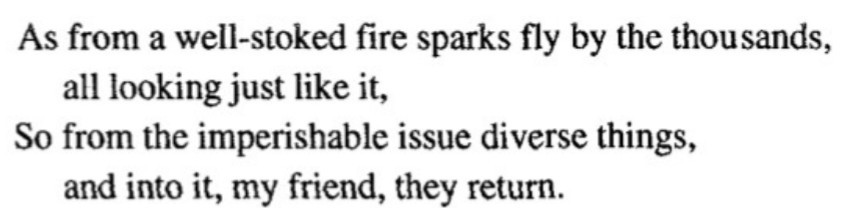
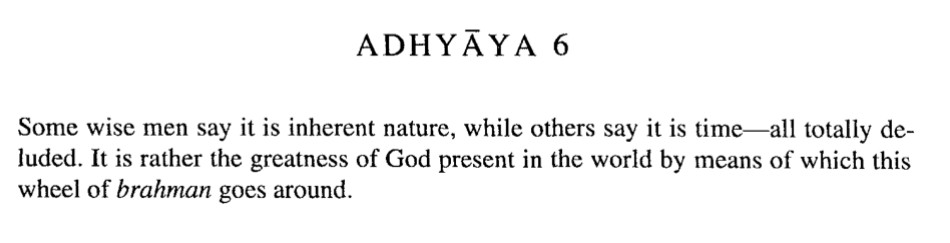
selected quotations from the upanishads:
brihadaranyaka https://netzsphaere.xyz/notice/B74ZwvQ1d6juOdLR5M (also check my comment)
chandogya https://netzsphaere.xyz/notice/B74tbjRuw2FQH9OxE0
taittiriya https://netzsphaere.xyz/notice/B76BpsgHOwpxIIyYLY
kausitaki https://netzsphaere.xyz/notice/B76j8IQBjblCpJq0Ho
kena https://netzsphaere.xyz/notice/B76jgBehOekFgjml60
katha https://netzsphaere.xyz/notice/B76oiBzRchCp4mGT3I
isha https://netzsphaere.xyz/notice/B77wtJNnTFhjytQbpo
shvetashvatara https://netzsphaere.xyz/notice/B782SiG7TOyv2VXMW0
mundaka https://netzsphaere.xyz/notice/B78575V2gTESbvtg8m
prashna https://netzsphaere.xyz/notice/B789bJsuAJy5jFjJEe
mandukya https://netzsphaere.xyz/notice/B78lJ5gM1lvej6atfM
brihadaranyaka https://netzsphaere.xyz/notice/B74ZwvQ1d6juOdLR5M (also check my comment)
chandogya https://netzsphaere.xyz/notice/B74tbjRuw2FQH9OxE0
taittiriya https://netzsphaere.xyz/notice/B76BpsgHOwpxIIyYLY
kausitaki https://netzsphaere.xyz/notice/B76j8IQBjblCpJq0Ho
kena https://netzsphaere.xyz/notice/B76jgBehOekFgjml60
katha https://netzsphaere.xyz/notice/B76oiBzRchCp4mGT3I
isha https://netzsphaere.xyz/notice/B77wtJNnTFhjytQbpo
shvetashvatara https://netzsphaere.xyz/notice/B782SiG7TOyv2VXMW0
mundaka https://netzsphaere.xyz/notice/B78575V2gTESbvtg8m
prashna https://netzsphaere.xyz/notice/B789bJsuAJy5jFjJEe
mandukya https://netzsphaere.xyz/notice/B78lJ5gM1lvej6atfM
0
0
2
georgia
georgia
@ellenor2000 most "revelations" are imperfect, but God is perfect. if you believe in the cosmic manifestation (this universe), its foolish to think that so much beauty can come of itself.
0
0
0
georgia
georgia
atheism should be reserved for precocious yet ignorant children and rebellious teens, not adults who should know better
2
0
1

georgia
georgia
@lain @newt to be more accurate my post was about the male reproductive role, not fatherhood. i used fatherhood euphemistically specifically to contrast reproductive sex with casual sex. fatherhood occurs mostly after birth, reproduction before it. the content of my post (addressing outdated theories of reproduction where the sperm is basically a homonculus and the female germinates it) is not "a father is useless" (although many fathers are, including mine). anyway i don't think its controversial that the male reproductive role is essentially sex.
0
0
1
georgia
repeated
repeated

lain
lain@lain.com
don't criticise a pregnant woman for being a bit tipsy, she's drinking for two..
0
3
6
georgia
georgia
@Suiseiseki ah yes, there is no ultimate Truth, no creator, and when the universe ceases to be, nothing exists. the only truth is what we can observe. very smart boy
0
0
0
georgia
georgia
i don't like samkhya, with its tattvas and its dualism, even though its an aid to yoga classically. i agree with the tantrics that the shakti is not insentient, indeed, no part of existence is devoid of Consciousness. i have this complaint with vedanta too. i love vedanta, i love the prasthanatrayi, but i love tantra especially kashmir shaivism even more.
0
0
0
georgia
georgia
Hinduism isn't the best source for information about Gods character or conduct (certain streams of christianity probably are, though in the vast corpus of Hinduism there are definitely stories about God that rival Christs virtues). also ironically Hinduism is a poor source for information about divine law/dharma (esp compared to the other indian religions which shun casteism, the dharma sutras/shastras were written by brahmins for brahmins and are very casteist. hinduism has a sexism problem too) with the notable exception of its (shared with other indian religions) frequent emphasis on nonviolence, especially uniquely (in world religions) towards animals. furthermore the religion of most of the vedas is not ideal, being so focused on performing often violent sacrifices for and hymning the virtues of the devas instead of extolling/expounding upon Brahman or providing insight into yoga or tantra. the system of sacrifice of the vedas is also quite transactional, it is not nishkama karma. and while one seldom finds a purva-mimamsakan today, the puranas which arguably dominate modern hinduism are also flawed. the "greatest purana", the srimad bhagavatam, has literally thousands of examples of sati.
with all that being said, Hinduism has a monopoly on a supreme truth which is the panentheist monist nature of God, non-dual absolute existence/truth/goodness, consciousness/knowledge, and bliss. hinduism also innovated another truth which is karma and the transmigration of the soul, both key vindications of Gods justice. but probably most importantly, Hinduism has the most developed science of liberation (God realization) of any religion, originating karma yoga in the bhagavad gita, having the most developed brahma-vidya (jnana yoga) of any religion, having the advanced meditative techniques of raja, hatha, and laya yoga, and also having greatly developed (prema)-Bhakti to the high point of any great saint-producing religion.
with all that being said, Hinduism has a monopoly on a supreme truth which is the panentheist monist nature of God, non-dual absolute existence/truth/goodness, consciousness/knowledge, and bliss. hinduism also innovated another truth which is karma and the transmigration of the soul, both key vindications of Gods justice. but probably most importantly, Hinduism has the most developed science of liberation (God realization) of any religion, originating karma yoga in the bhagavad gita, having the most developed brahma-vidya (jnana yoga) of any religion, having the advanced meditative techniques of raja, hatha, and laya yoga, and also having greatly developed (prema)-Bhakti to the high point of any great saint-producing religion.
0
0
2
georgia
georgia
he also clearly means no offense by calling some sects schools and others cults.
0
0
2