Conversation


georgia
georgia
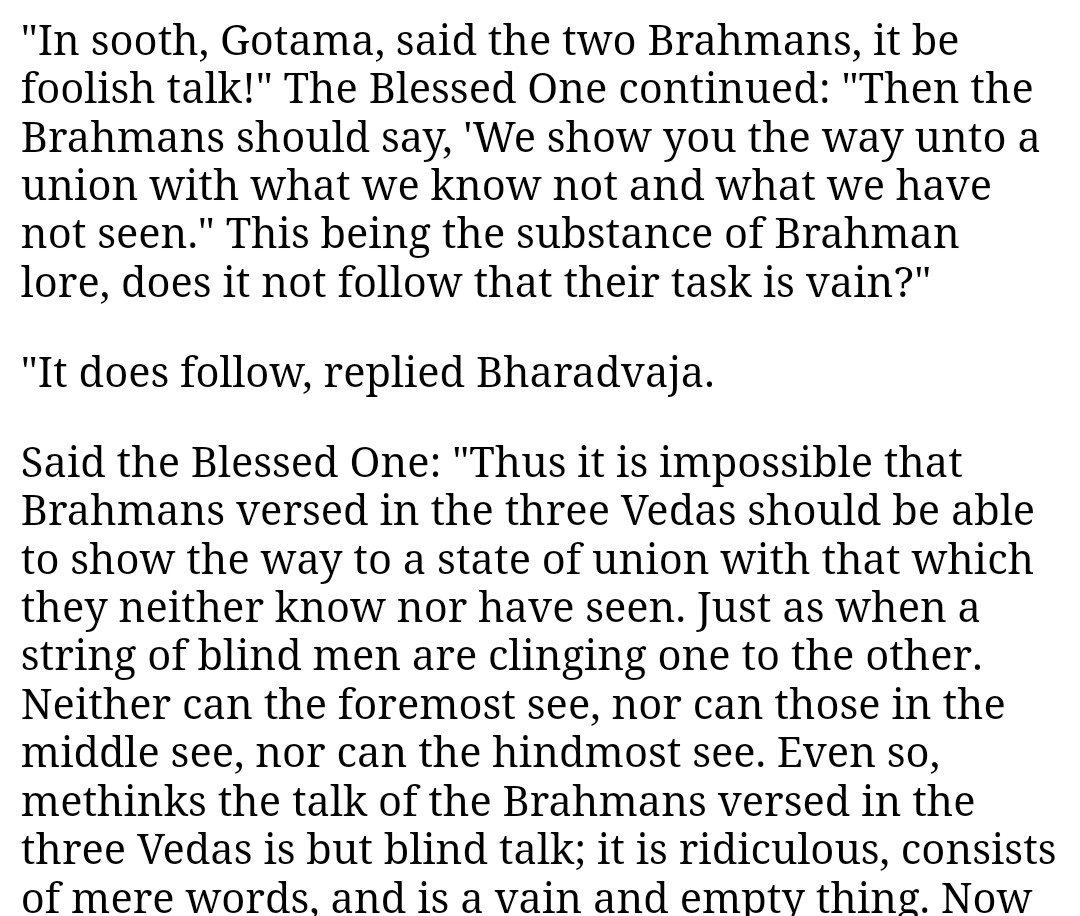
this boils down to "God can't be described or conceived of, so yoga as union with God is impossible"
 1
1
 0
0
 0
0

@georgia I haven't read the whole text, but for what I read on the pic you posted he's totally right. I don't think he's talking about yoga as an impossibility, just about the futility of words, even sacred words, to do that union. If it's as I think I can only agree with him when he call it a foolish talk. It's also stated on the tao te ching:
Too many words hasten failure
Cannot compare to keeping to the void
Too many words hasten failure
Cannot compare to keeping to the void
1
0
0
georgia
georgia
@sathariel so much of the buddhist philosophy esp belief in sunyata is based in the emptiness of words that describe reality as meaning reality itself is empty. anyway union with brahman is a real and beautiful thing even though its beyond description. matters of the spirit typically aren't, although samadhi is verifiable.
1
0
0
@georgia I've read others description of what sunyata means, but anyways, they aren't important, just as debating about descriptions is a foolish talk as that guy said. Empty, non-empty, both of them at same time, these are only mistakes, different forms of pursuing a mirage. One should instead work on cleaning the self and I think persons like Gotama were telling us that. The union is very possible but reading and discussing about it doesn't make it, like learning about a place isn't the same as visiting it.
1
0
0
georgia
georgia
@sathariel the link I posted was wrong. this is my actual source.
https://sacred-texts.com/bud/btg/btg50.htm
I read the whole thing and my initial interpretation was somewhat innaccurate upon further reading, but your interpretation is not accurate either.
to summarize basically the purport of the buddha is that the brahmins who teach the vedas (including the upanishads) do not have the path to union with brahman because they say they cannot describe brahman and are not virtuous like brahman, and are wrong when they say all paths lead to him, and are also wrong when they pray for union with brahman, and that the true path to union with brahman is known by the buddha himself. so basically, tl;dr, the buddha has the path to brahman and knows brahman, and the brahmins dont.
heres what I contest:
1. that saying you cant know or havent seen brahman means you dont have the path to brahman
the upanishadic attitude that brahman cant be known is reflected in the kena upanishad which says that:
"He who thinks he knows It not, knows It.
He who thinks he knows It, knows It not.
The true knowers think they can never know It,
while the ignorant think they know It."
also in the taittiriya upanishad "words turn back along with the mind, failing to reach Brahman".
aka, the vedantic attitude is that Brahman (ultimate reality/God) can't be sufficiently conceived of or described, only experienced in samadhi.
the buddha summarizes this vedantic attitude as that the brahmins "know that they cannot know it". or as the brahmins themselves say "How can any one see Brahma or understand him, for the mortal cannot understand the immortal." the buddha also says and I criticized him for this:
"But tell me, continued the Buddha has any one of the Brahmans, versed in the Vedas, seen Brahma face to face?" "No sir!" was the reply.
the notion that one has to see and be able to describe brahman to have a path to union with brahman is plainly stated by the buddha here:
"Thus it is impossible that Brahmans versed in the three Vedas should be able to show the way to a state of union with that which they neither know nor have seen."
so your interpretation that the buddha is mainly criticizing the speech of the brahmins is wrong, he says "their task is in vain" (referring to the task of union with brahman which prompted the brahmins question, not the task of describing brahman). basically he is criticizing the entire vedantic approach to unification with brahman basing his criticism both on the speech and the conduct of the brahmins. I agree that unvirtuous people cannot be yogis without cultivating virtue through yoga, or as the buddha says "How can they be united to that which is most unlike their nature?" but i disagree strongly that brahman must be understood by the mind, and I also disagree strongly with the unsaid assertion that the buddhist nontheism or atheism is superior because there is nothing unknown when there is no ishvara. but I might be wrong in making this logical next step, a step which prompted my original post.
my next criticism is that:
2. buddhas assertion that all paths (all religions) dont lead to brahman, and that invoking Gods doesnt lead to brahman
the buddha says the paths of the brahmins which involve prayer/invocation of deities cannot lead to merging with brahman, comparing it to calling the name of the other bank of a river to cross it. it is true that invocation of deities is common in the upanishads, but I dont believe it is futile. bhakti yoga (the yoga of loving devotion) is rejected by orthodox/Theravada buddhism but is a very valid path to union with brahman, and likewise it is also the purport of many hindu bhaktas that all paths lead to God eventually, referring to all religions and to the multiplicity of yogas. basically, hinduism was and is very eclectic and accepting of various ways of worshipping and approaching God to this day, while orthodox buddhism has one ideal path. (of course, if bhakti is useless, it wouldnt have also been adopted by mahayana and vajrayana buddhists as deity yoga etc).
anyway, to summarize, my main criticism of the buddha is the notion that because brahman is known as unfathomable to vedantics that union with brahman is impossible for such brahmins. one doesnt need to see God to merge with him, and again, such a purport echoes the buddhist assertion of supremacy of nontheist/atheist sunyata philosophy. but for the purpose of debate the buddha does accept that in *his* path union with brahman happens. what the buddha doesnt say is how different his conception or rather nonconception of brahman is from the hindus. while the mahayana concept of the buddha-womb is similar in ways to the hindu concept of brahman, this anecdote doesnt approach it, so its reasonable to assume that the buddha is only talking about union with brahman rhetorically to mean parinirvana.
https://sacred-texts.com/bud/btg/btg50.htm
I read the whole thing and my initial interpretation was somewhat innaccurate upon further reading, but your interpretation is not accurate either.
to summarize basically the purport of the buddha is that the brahmins who teach the vedas (including the upanishads) do not have the path to union with brahman because they say they cannot describe brahman and are not virtuous like brahman, and are wrong when they say all paths lead to him, and are also wrong when they pray for union with brahman, and that the true path to union with brahman is known by the buddha himself. so basically, tl;dr, the buddha has the path to brahman and knows brahman, and the brahmins dont.
heres what I contest:
1. that saying you cant know or havent seen brahman means you dont have the path to brahman
the upanishadic attitude that brahman cant be known is reflected in the kena upanishad which says that:
"He who thinks he knows It not, knows It.
He who thinks he knows It, knows It not.
The true knowers think they can never know It,
while the ignorant think they know It."
also in the taittiriya upanishad "words turn back along with the mind, failing to reach Brahman".
aka, the vedantic attitude is that Brahman (ultimate reality/God) can't be sufficiently conceived of or described, only experienced in samadhi.
the buddha summarizes this vedantic attitude as that the brahmins "know that they cannot know it". or as the brahmins themselves say "How can any one see Brahma or understand him, for the mortal cannot understand the immortal." the buddha also says and I criticized him for this:
"But tell me, continued the Buddha has any one of the Brahmans, versed in the Vedas, seen Brahma face to face?" "No sir!" was the reply.
the notion that one has to see and be able to describe brahman to have a path to union with brahman is plainly stated by the buddha here:
"Thus it is impossible that Brahmans versed in the three Vedas should be able to show the way to a state of union with that which they neither know nor have seen."
so your interpretation that the buddha is mainly criticizing the speech of the brahmins is wrong, he says "their task is in vain" (referring to the task of union with brahman which prompted the brahmins question, not the task of describing brahman). basically he is criticizing the entire vedantic approach to unification with brahman basing his criticism both on the speech and the conduct of the brahmins. I agree that unvirtuous people cannot be yogis without cultivating virtue through yoga, or as the buddha says "How can they be united to that which is most unlike their nature?" but i disagree strongly that brahman must be understood by the mind, and I also disagree strongly with the unsaid assertion that the buddhist nontheism or atheism is superior because there is nothing unknown when there is no ishvara. but I might be wrong in making this logical next step, a step which prompted my original post.
my next criticism is that:
2. buddhas assertion that all paths (all religions) dont lead to brahman, and that invoking Gods doesnt lead to brahman
the buddha says the paths of the brahmins which involve prayer/invocation of deities cannot lead to merging with brahman, comparing it to calling the name of the other bank of a river to cross it. it is true that invocation of deities is common in the upanishads, but I dont believe it is futile. bhakti yoga (the yoga of loving devotion) is rejected by orthodox/Theravada buddhism but is a very valid path to union with brahman, and likewise it is also the purport of many hindu bhaktas that all paths lead to God eventually, referring to all religions and to the multiplicity of yogas. basically, hinduism was and is very eclectic and accepting of various ways of worshipping and approaching God to this day, while orthodox buddhism has one ideal path. (of course, if bhakti is useless, it wouldnt have also been adopted by mahayana and vajrayana buddhists as deity yoga etc).
anyway, to summarize, my main criticism of the buddha is the notion that because brahman is known as unfathomable to vedantics that union with brahman is impossible for such brahmins. one doesnt need to see God to merge with him, and again, such a purport echoes the buddhist assertion of supremacy of nontheist/atheist sunyata philosophy. but for the purpose of debate the buddha does accept that in *his* path union with brahman happens. what the buddha doesnt say is how different his conception or rather nonconception of brahman is from the hindus. while the mahayana concept of the buddha-womb is similar in ways to the hindu concept of brahman, this anecdote doesnt approach it, so its reasonable to assume that the buddha is only talking about union with brahman rhetorically to mean parinirvana.
0
0
0